

Some routes just make sense. Belgrade to the southern Peloponesos isn’t a standard package-holiday run — it’s a proper drive through three countries, two distinct worlds, and a handful of places most road trippers skip entirely. This is how ours went.
The Route at a Glance
Belgrade → Skopje → Ioannina → Kalamaki (Peloponesos) → Ioannina → Belgrade
Total driving: roughly 1,600 km one way. We spread it across several days in each direction, never rushing, always stopping. The route passes through Serbia, North Macedonia, and Greece — three border crossings, three toll systems, and one very noticeable shift in landscape once you drop south of the Albanian border range into Greek territory.
This is not a highlights reel trip. It’s a slow one. And that’s exactly what makes it worth doing.
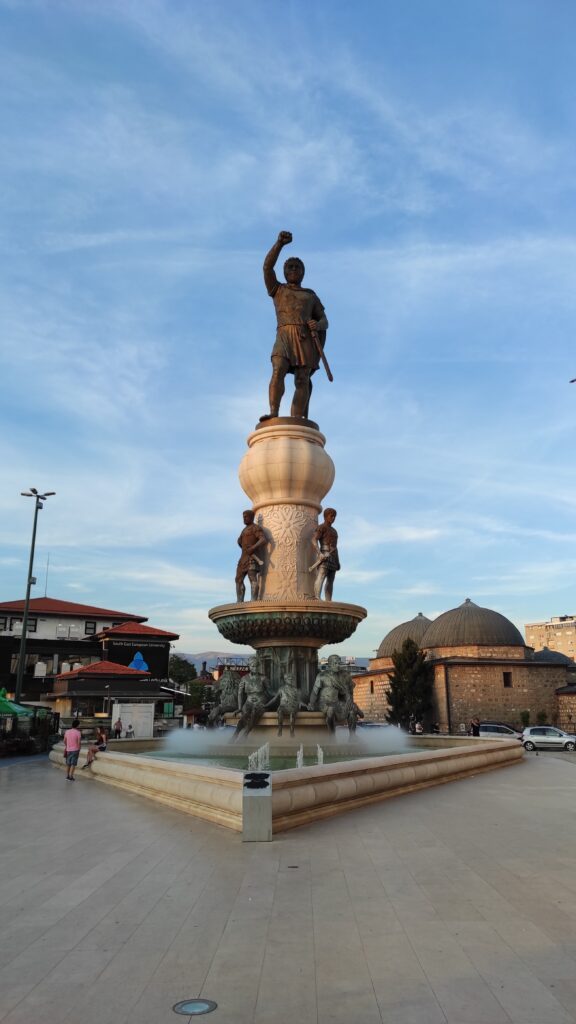
First Stop: Skopje
We had family to visit, which meant Skopje got more than the usual overnight treatment. That turned out to be the right call.
The city is easy to underestimate from the outside — it doesn’t carry the same reputation as Sarajevo or Dubrovnik — but spend an afternoon in the right part of it and that changes quickly.
The old Bazaar, Čaršija, sits on the north bank of the Vardar, and it’s one of the most intact Ottoman-era market districts in the Balkans. Not restored and sanitised — actually intact. Narrow lanes, metalworkers still working, bakeries that have been in the same family for generations, and sweet shops selling Turkish delight and baklava by weight. We bought more than we should have and hit the road with a bag of local sweets that didn’t survive the first hour of driving.
Into Greece: Ioannina
The drive from Skopje to Ioannina takes you through North Macedonia and across the Albanian border corridor before entering Greece near Kakavia. The landscape shifts dramatically — you drop through mountain passes and come out into the broader, greener basin that holds Ioannina and its lake.
We stayed for a few days. It earned every one of them.
Perama Cave
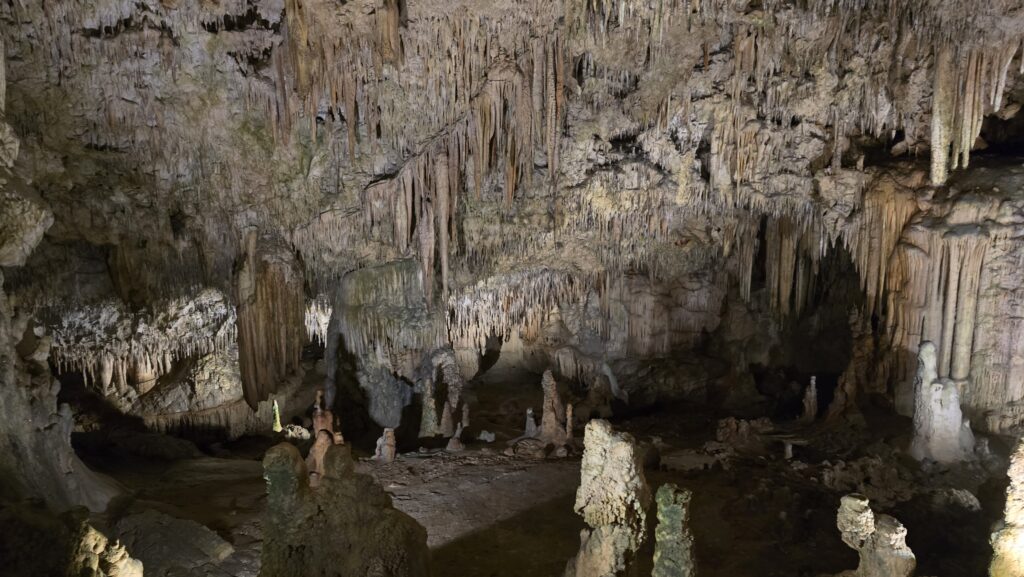
About 4 km outside the city, Perama is one of the largest cave systems in Greece and genuinely impressive in a way that caves rarely are after you’ve seen a few. The formations are dense and varied — stalactites, stalagmites, columns, curtains — and the guided route takes around 45 minutes. Go in the morning before the tour groups stack up.
The Mosque and Fortress
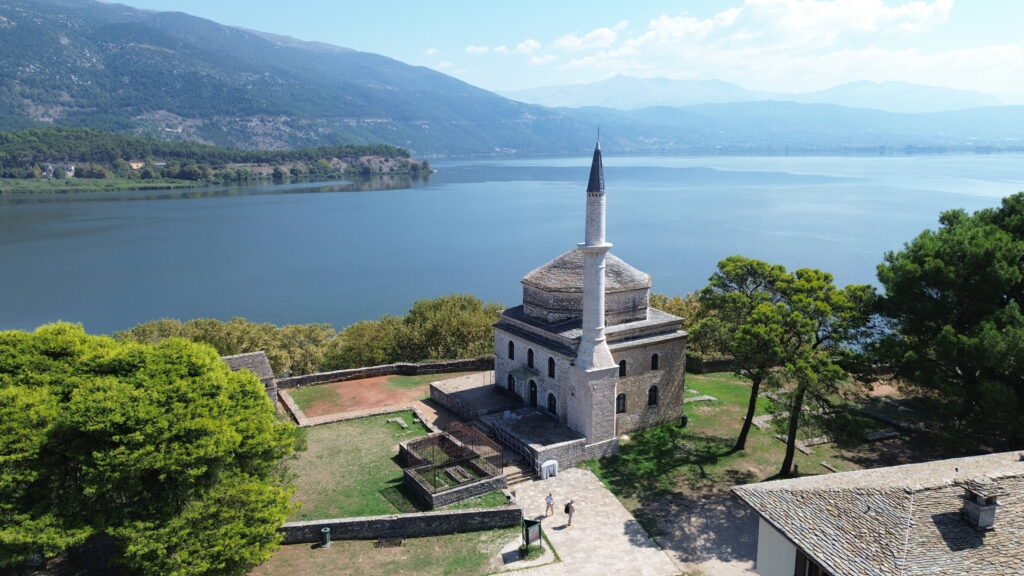
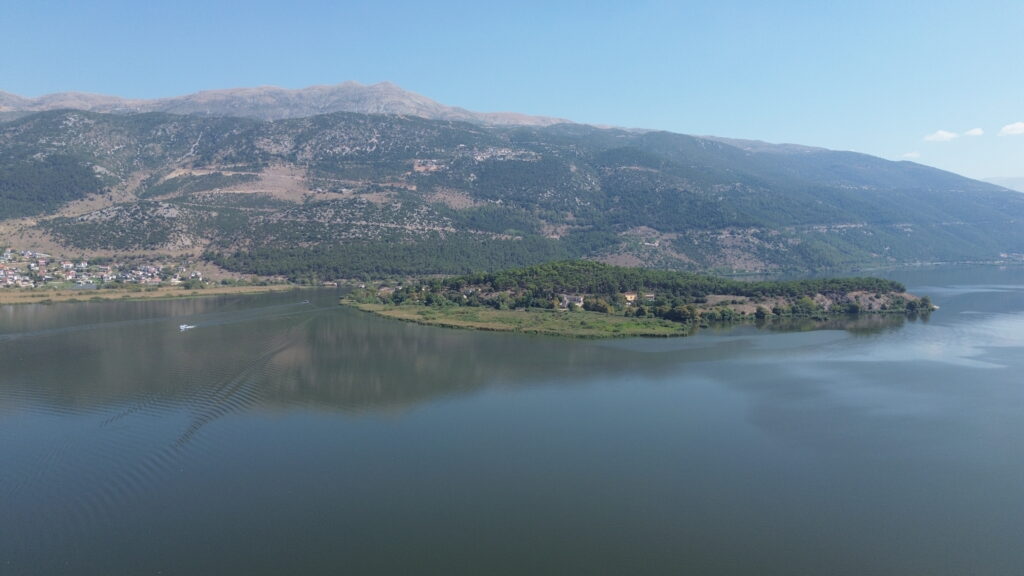
On the lakeshore sits the old fortress — its walls still largely intact — and inside it, a mosque whose name escapes us but whose setting doesn’t. It sits within the kastro quarter, a walled enclave that once held the court of Ali Pasha. The whole complex has a layered quality: Byzantine foundations, Ottoman additions, and a view across the lake that makes it easy to understand why someone chose this spot to rule from.
The Island
Most towns on a lake have a waterfront. Ioannina has an island. You take a small boat from the main quay — five minutes across the water — and step into what feels like a separate village that never quite decided what century it was in. There are monasteries, a small museum in the house where Ali Pasha was killed, and almost no cars. The island is the attraction. Not what’s on it specifically — the fact of it. A community living on a lake island in the middle of a Greek city, operating on its own quiet schedule.
South to the Peloponesos — Kalamaki and Petalidi
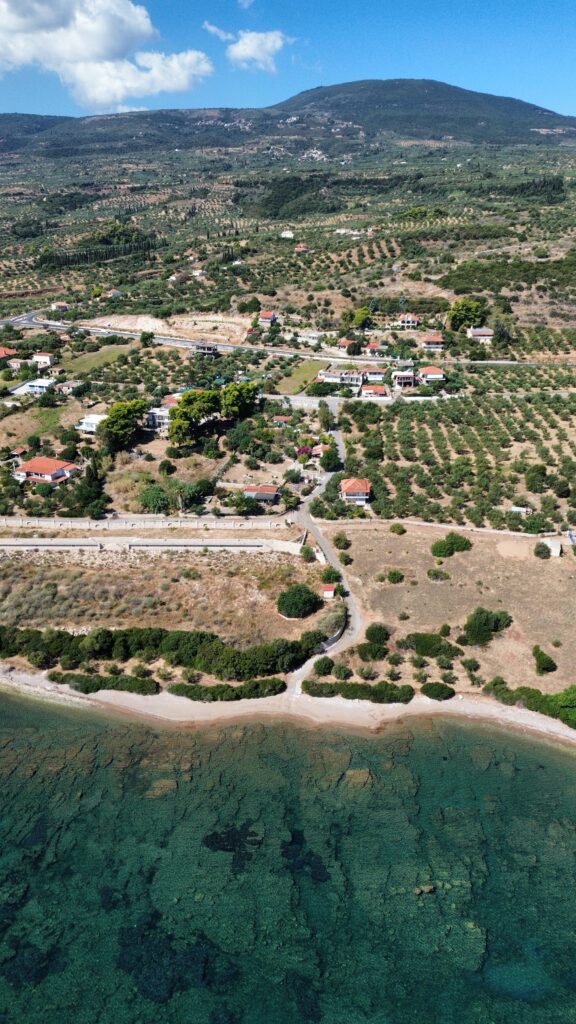
The drive from Ioannina south is long but rewarding — you cross the Rio-Antirrio bridge over the Gulf of Corinth, one of the genuinely spectacular pieces of infrastructure in Europe, and the landscape opens into the wide agricultural plain of the Peloponesos. We were heading for Kalamaki, a small village sitting just above the coast next to Petalidi in Messinia.
We stayed for ten days. That’s not a typo.
The pace here is genuinely different from anywhere else on the route. Kalamaki is the kind of place where the same five cars are parked on the same street every morning and the kafeneio opens when it opens. It’s quiet in a way that takes a day to adjust to and then becomes exactly what you needed.
The Panagiri in Petalidi
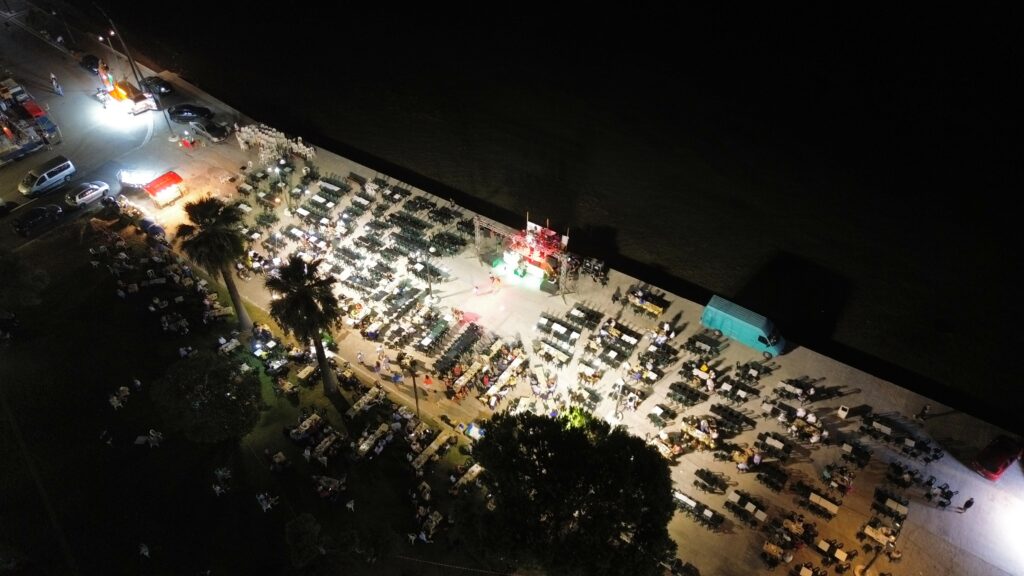
We timed our stay — partly by luck — to catch a panagiri in Petalidi. A panagiri is a village festival tied to a saint’s day: outdoor tables, live music that starts late and runs until very late, local food, and the entire village plus everyone from three villages over all in the same square. It’s not a tourist event. Nobody is performing for visitors. You just show up, eat, and stay as long as the music keeps going.
Day Trips: Koroni and Kalamata
Koroni
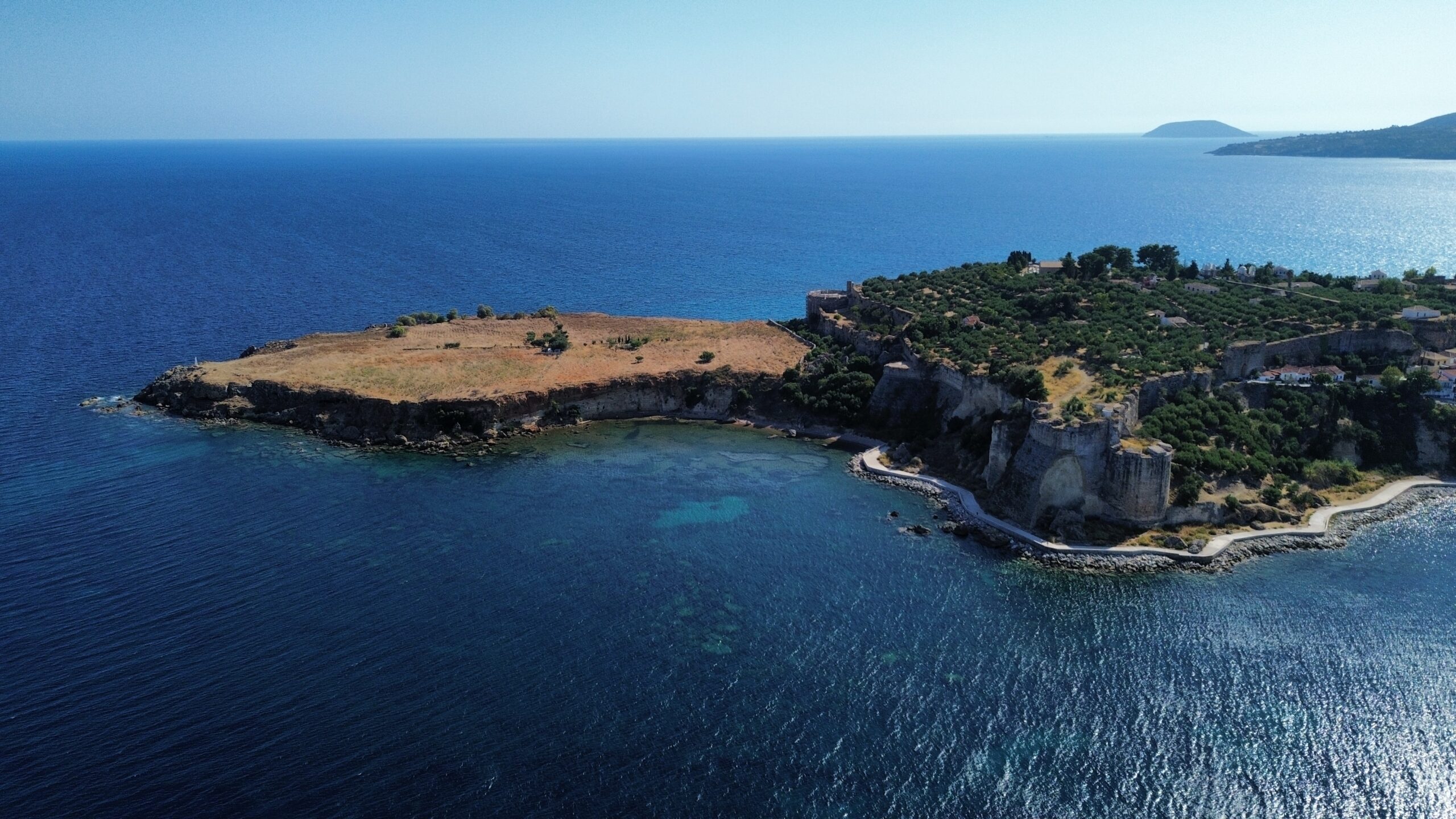
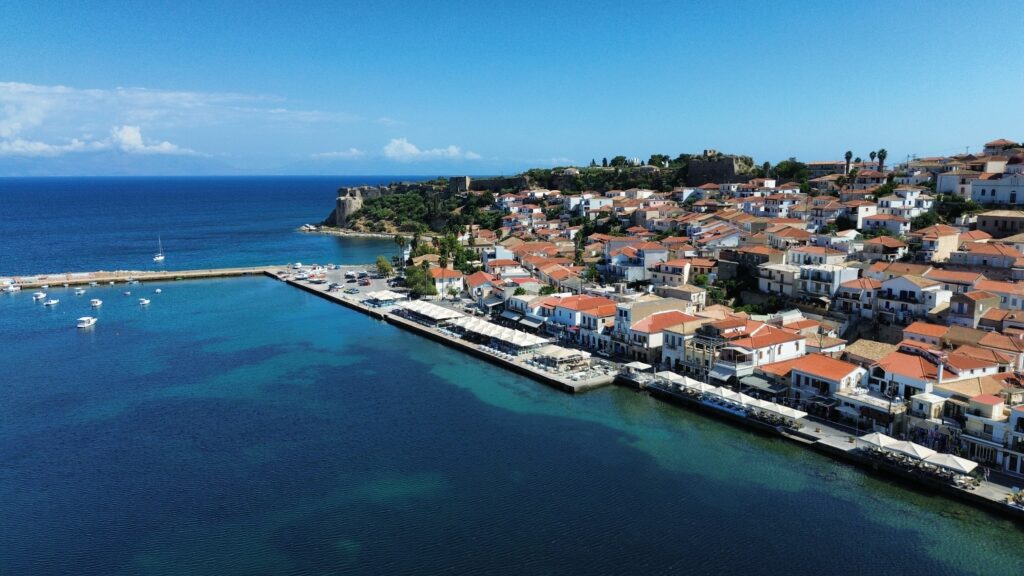
About 35 km west of Petalidi, Koroni sits on a headland at the southwestern tip of the Messenian Gulf. The Venetian castle at the top is free to enter and largely unrestored — you walk through the walls into what is still a functioning village with houses built against the old battlements, a convent, gardens, and cats. Lots of cats.
The food was some of the best of the trip. We ate at a taverna on the waterfront — grilled fish, local olive oil, horta, house wine — and it cost almost nothing. Koroni is the kind of place that rewards going slowly.
Kalamata
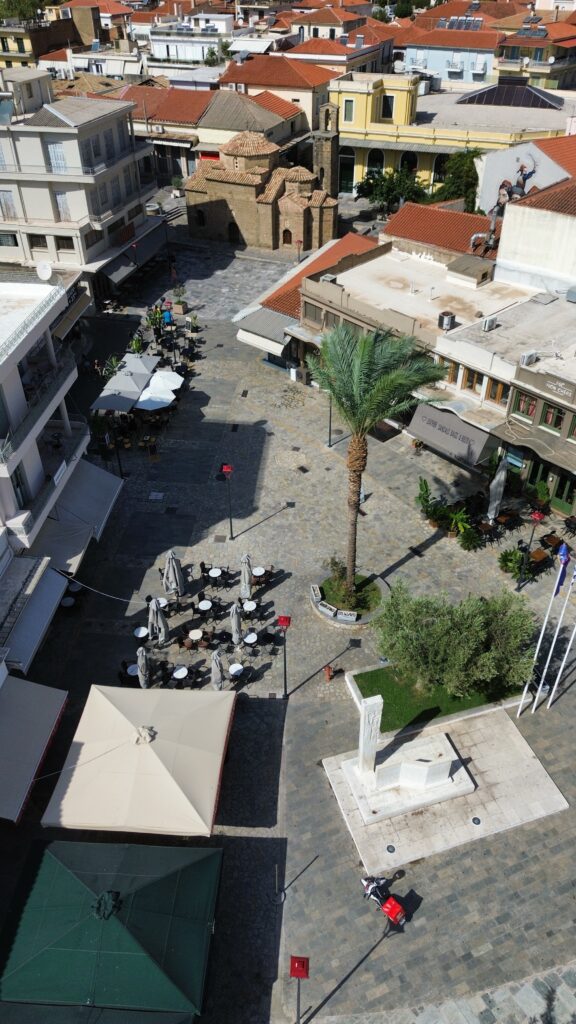
Kalamata is the reference point for everything in this part of the Peloponesos — the city everyone says they’re “near” when they don’t want to explain where they actually are. It earns its prominence. The waterfront promenade is lively without being overdone, the market area behind it is genuinely useful for stocking up, and the castle on the hill above the old town gives you a clean view across the bay.
It also produces the olives. Worth eating them where they’re from.
The Drive Back — Ioannina Again
We stopped in Ioannina on the return leg, mostly for logistics, and it turned out to be a different experience from the first visit. A second pass through a city strips away the novelty and replaces it with something more useful — you notice things you walked past the first time, you eat somewhere different, you sit by the lake for longer because you’re not trying to tick anything off.
If the route allows for it, two nights in Ioannina is better than one in each direction. The city is worth it.
How We Planned This Trip
We planned this route the way most people do — a mix of Google Maps tabs, forum threads from four years ago, and a rough guess at how many driving hours felt reasonable before everyone got tired. It worked, mostly. But it took a while to piece together.
If we were planning it now, we’d run it through RouteMuse first. You put in your start and end city, what you want to see, and how many hours you want to drive each day — and it generates a complete day-by-day guide with real driving distances, fuel and toll estimates by country, and sightseeing recommendations matched to your interests. The whole thing lands in your inbox as a PDF in about a minute.
We didn’t have it back then. This is what it would have looked like:
Why We’d Recommend This Route
The Belgrade–Peloponesos road trip works because it doesn’t try to do too much. You’re not hitting five countries in seven days. You’re moving through a logical corridor with genuine stops — a Balkan capital, a Greek lake city that most tourists never reach, and a stretch of southern Greek coast that is as far from the Santorini crowd as you can get while still being in Greece.
Skopje and Ioannina are underrated in a way that will probably correct itself in the next few years. The southern Peloponesos is the version of Greece that people who’ve been to Greece three times eventually find. The drive between them is straightforward, the roads are good, and there is almost nobody doing exactly this route.
That’s reason enough.
Planning a similar route? Sign up for Road Notes — our newsletter with free travel resources and trip planning tools. No spam, ever.